RANO 2.0 Validated
Volumetric Endpoints.
We Run Volumetry.
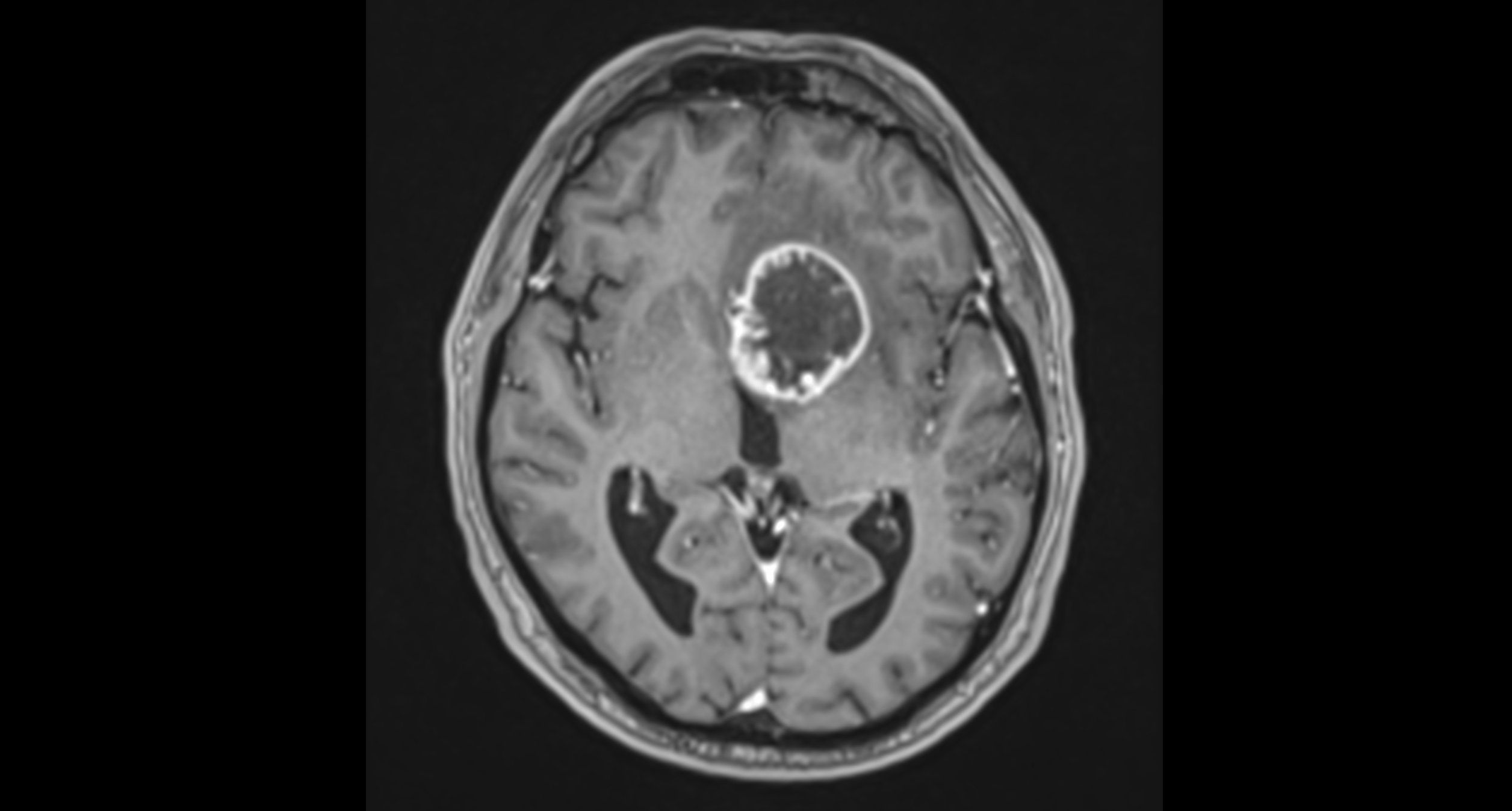
T1 post-contrast MRI Volumetric Segmentation
T1 MRI
Volumetric Segmentation
FDA 21 CFR Part 11 HIPAA GDPR PIPEDA AWS

Clinical Challenge

Why Diameter Trends Fail in GBM

Clinical Challenge

A 3 mm change on a 3 cm tumor. By diameter — 10%. Stable disease.

But the reader picks a slice one position off — a different cross-section of an irregular 3D mass. The apparent diameter changes by 2 mm in one axis. The bidimensional product swings 15–20% on the same scan, same day, same lesion. Next timepoint, a different reader picks a different slice. Your trend is noise.

Place the calipers 0.5 mm off on the same slice and it's worse: D1 over-read, D2 under-read, errors partially cancel. Or D1 and D2 both over-read because the reader included meningeal thickening — errors compound. You don't know which one happened. Neither does the biostatistician analyzing your PFS.

Volumetric segmentation uses every slice. Boundary errors distribute across thousands of surface voxels and average out. The trend holds across timepoints — even across readers.

Three timepoints of +12% / +28% / +15% by 2D tells you nothing.
Three timepoints of +31% / +33% / +35% by volume tells you progression is building.

RANO 2.0 codified volumetric thresholds. The operational guide recommends consistent software across all patients in multicenter trials. We deliver exactly that.

Measurement Precision

Supported Criteria

Supported Response Criteria

Morphologic Criteria
RANO 2.0
— Bidimensional — Volumetric (prespecified per protocol)
Legacy criteria
— RANO-HGG — mRANO — iRANO (supported for ongoing trials initiated before RANO 2.0 adoption)
Functional Assessment
Viable tumor volume segmentation
Necrotic cavity volume
Total lesion volume (enhancing + non-enhancing + FLAIR)
DSC perfusion MRI
DCE perfusion MRI
Diffusion MRI / ADC mapping
MR spectroscopy brief description

Quantitative Imaging

What We Measure

Viable Tumor VolumeEnhancing tissue only
Cavity, cystic components, and meningeal thickening separated — not automatically, not trivially, but with subspecialist oversight at every timepoint.
MRI T1+C
Necrotic Cavity VolumePost-surgical + post-radiation cavitation
Post-surgical and post-radiation cavitation tracked as a separate compartment. Expanding necrosis alongside stable enhancing volume provides supplementary context for equivocal cases.
MRI T1+C
Total Lesion VolumeEnhancing + non-enhancing + FLAIR
Required non-enhancing disease evaluation in non-enhancing and mixed tumors. Volumetric segmentation recommended for IDH-mutant gliomas and trials using antiangiogenic agents.
Multi-sequence
ΔVolume TrendingEarly response detection
Longitudinal change against baseline for response, against nadir for progression. The measurement precision that makes subthreshold trending readable — where diameter noise erases it.
Longitudinal
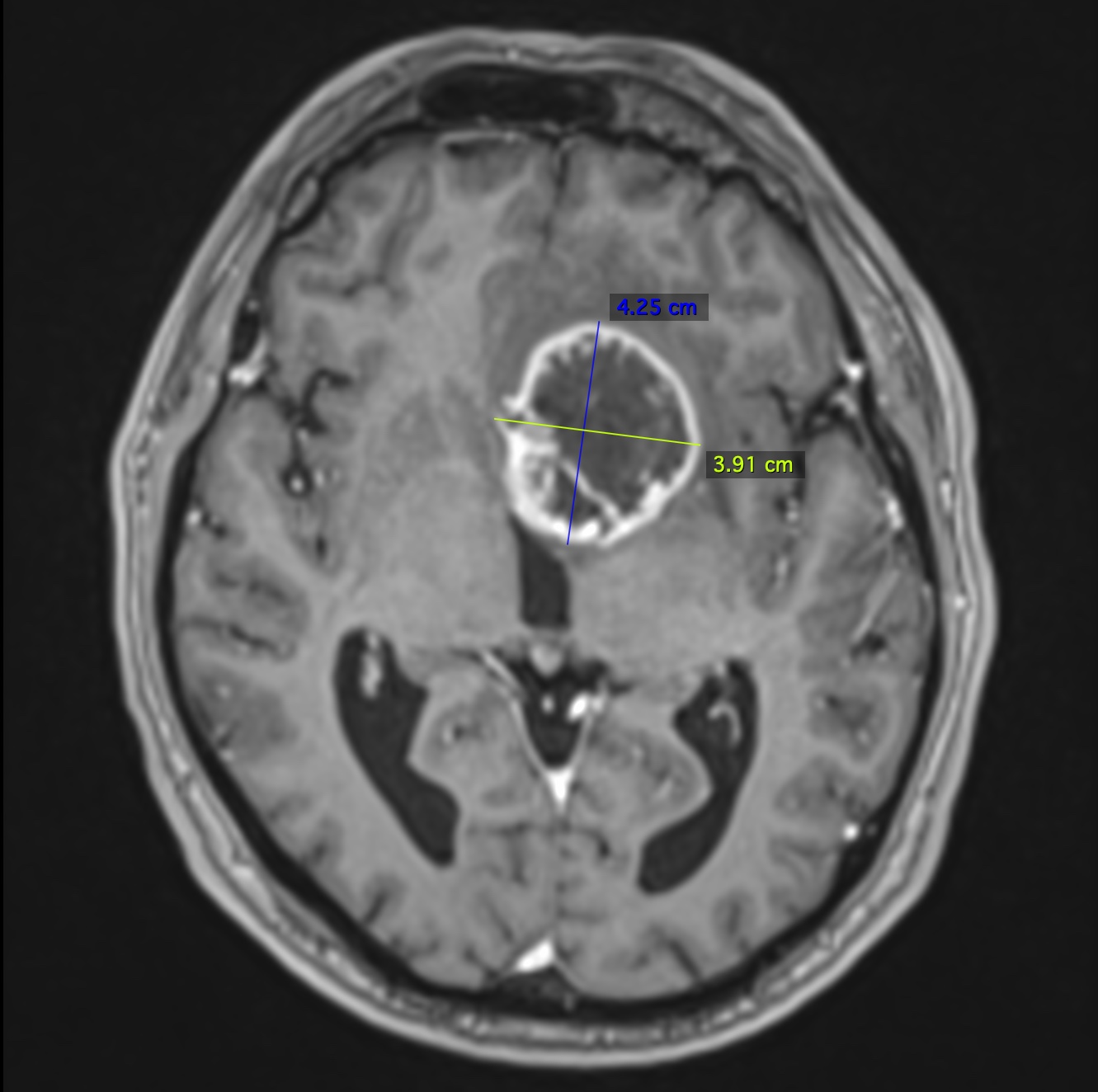
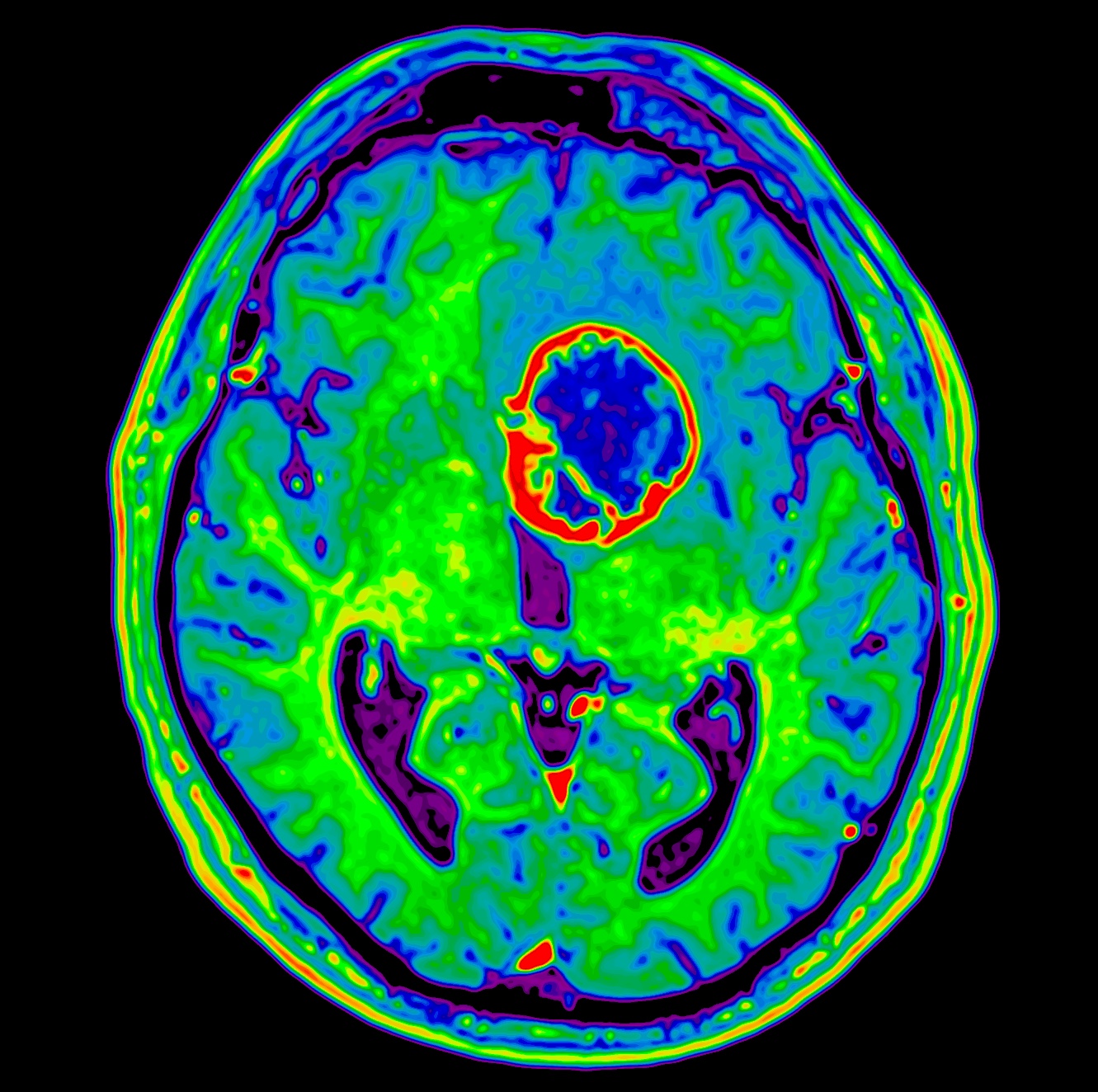
T1 post-contrast MRI with RANO bidimensional calipers (4.25 × 3.91 cm) rCBV perfusion map of the same ring-enhancing lesion
RANO 2D — 4.25 × 3.91 cm rCBV Perfusion
3D Volumetric Rotation

Structural + Adjunctive — Same GBM Lesion

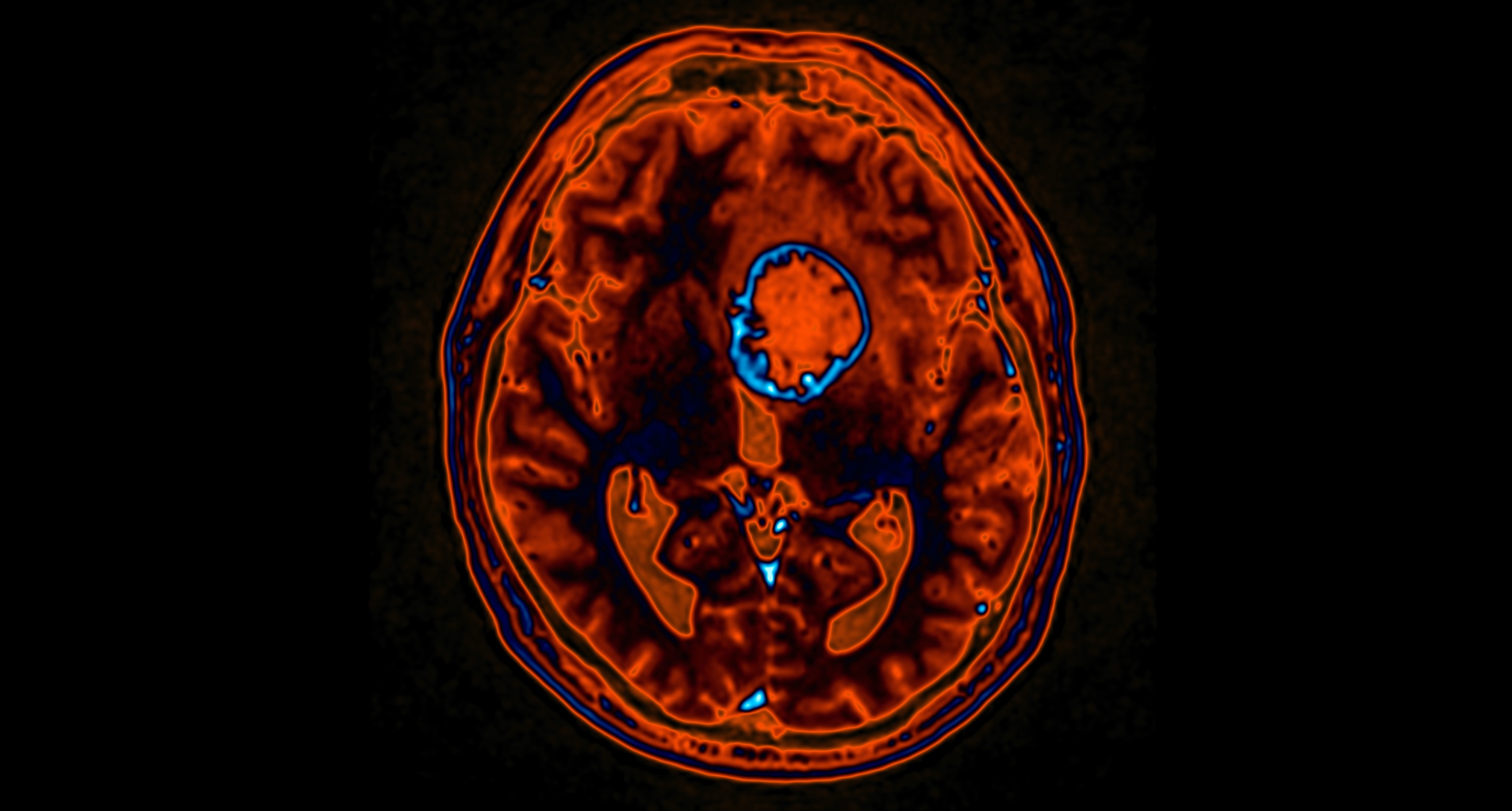
Top: T1 post-contrast with RANO bidimensional calipers (4.25 × 3.91 cm) — the codified RANO 2.0 endpoint. Same slice crossfaded with rCBV perfusion — adjunctive imaging where the criteria point but don't yet mandate. Bottom: 3D volumetric rotation across all slices.

Full-Stack Imaging

Full-Stack GBM Imaging

BioSUITE Platform

Acquisition Compliance QA

BTIP-standardized protocol enforcement before the reader opens the case
Slice thickness, spatial resolution, and 3D vs 2D acquisition type validated against protocol requirements
Pre- and post-contrast T1 parameter matching confirmed — required for T1 subtraction mapping
T2 / FLAIR sequence completeness
Diffusion and perfusion series QA
Non-compliant acquisitions flagged to the site in real time — not discovered at the read
Parameter drift and field strength changes tracked across timepoints to flag consistency breaks early
Advanced Analysis

Volumetric Endpoints + Functional Integration

Measurability by 2D criteria first
Then enhancing volume segmented on T1+C with T1 subtraction mapping — cavity, cystic components, and meningeal thickening separated
Every segmentation reader-approved by a subspecialist
Necrotic cavity tracked separately
FLAIR evaluated where protocol requires
Perfusion and diffusion available at every read — informing equivocal calls, not defining response
Same software, same ROI logic, baseline through final follow-up
Central Read

RANO 2.0

Volumetric is our operational default
Bidimensional delivered when the protocol specifies it
Both map to operational RANO 2.0 thresholds — 50%/25% by area, 65%/40% by volume — prespecified per trial
Confirmation scan workflow structured for the 12-week post-RT window and configurable for immunotherapy or recurrent-setting protocols
Neuro-oncology–trained neuroradiologists — not generalists rotating across tumor types
24–72h turnaround per timepoint read
FDA 21 CFR Part 11 compliant audit trail

Why Volumetryx

Why Sponsors Choose Volumetryx for GBM

RANO 2.0 Volumetric as Operational Default

RANO 2.0 codified volumetric as a co-equal method. The operational guide recommends consistent software across all patients. We made it our default. Bidimensional delivered when your protocol specifies it.

Neuro-Oncology Readers

Pericavity rim or measurable nodule? Meningeal scar or enhancing tumor? These calls require neuro-oncology training. Our readers have it. Not generalists rotating across tumor types.

24–72h Turnaround

Median survival 14–16 months. A week-long read delay is not minor. 24–72h per timepoint read — workflow SLA, not aspiration.

Protocol QA Before the Read

BioSUITE runs two QA gates. First at the site, before submission — non-compliant acquisitions flagged while the patient is still available for re-scan. Second on receipt, before the reader opens the case. Resolution, parameter matching, sequence completeness validated twice. Nothing reaches the reader unchecked.

Ready to run RANO 2.0
the way it was written?

Any timepoint. Any protocol. We'll run a full volumetric analysis on your existing imaging and show you what your current reads are missing.

Opening calendar